
Malaysia’s e-invoicing system is governed by Lembaga Hasil Dalam Negeri Malaysia (LHDNM). Companies / Taxpayers will be expected to submit invoices electronically (e-invoice) to LHDNM for validation.
The e-invoicing ecosystem comprises various components, including structured data formats, digital signatures, and secure data exchange protocols, ensuring the authenticity, integrity, and confidentiality of electronic invoices.
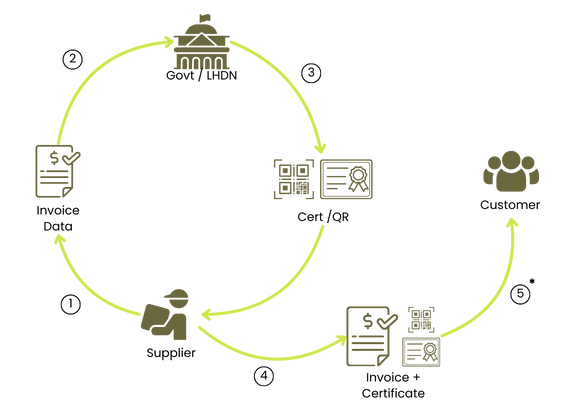
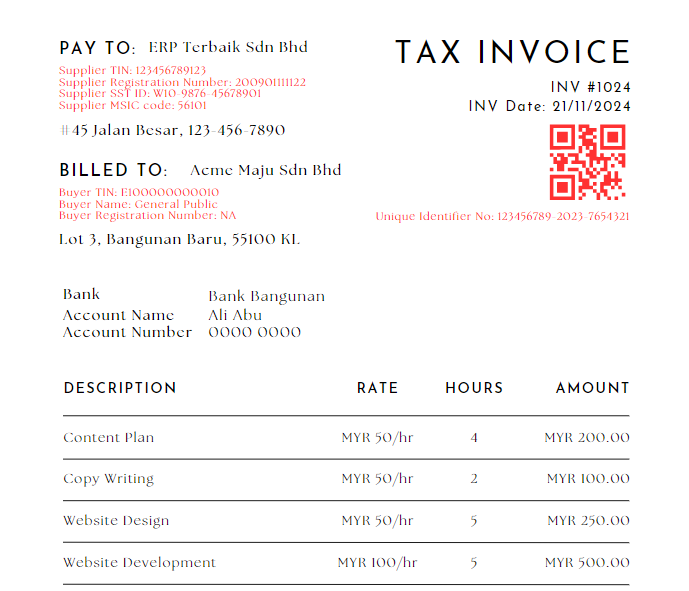
If an EDI / PEPPOL electronic invoice is generated (to be sent to the Customer), the certificate data is to be embedded into the electronic invoice.
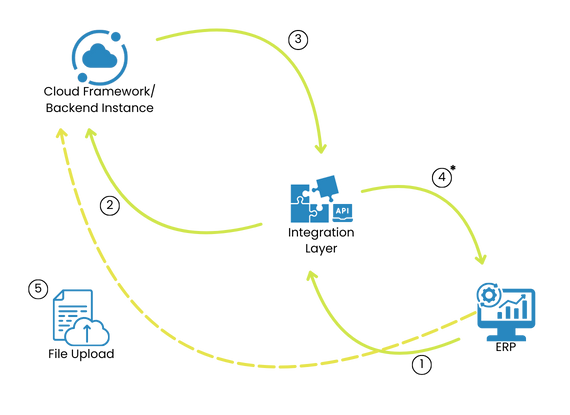
Invoice (and details), certificate, and other data validated by LHDNM will be returned to the Integration Layer.
Depending on the Integration Layer / API integration to the ERP, relevant data is updated into the ERP accordingly (this may depend on the ERP’s technical functionality).
In the event the ERP solution is unable to integrate through an API, a file upload process will be adopted to the e-invoice cloud framework/backend instance.
Mandatory implementation for all other taxpayers.
Mandatory for taxpayers with annual turnover or revenue of >MYR 25 million and up to MYR 100 million.
Mandatory for taxpayers with annual turnover or revenue of >MYR 100 million

A. Technically, the LHDNM initiative for e-invoicing focuses on the validation of invoice data and the generation of a certificate / QR code. This process allows for end Customers to cross-check invoice details, and also improves tax reporting and collection.
B. LHDNM’s initiative for e-invoicing does not immediately focus on the exchange of electronic invoices (e-invoice) in an integrated and structured data format (for example through an EDI, PEPPOL, and such) at this stage.
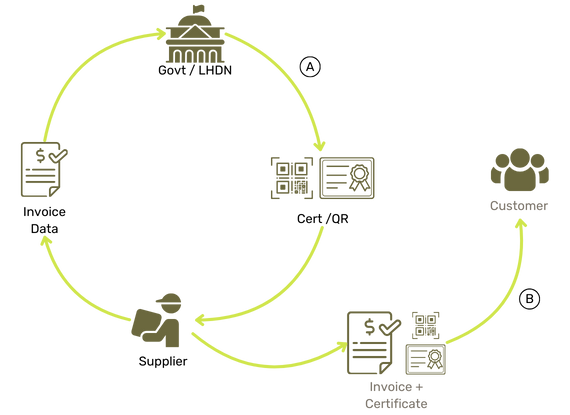
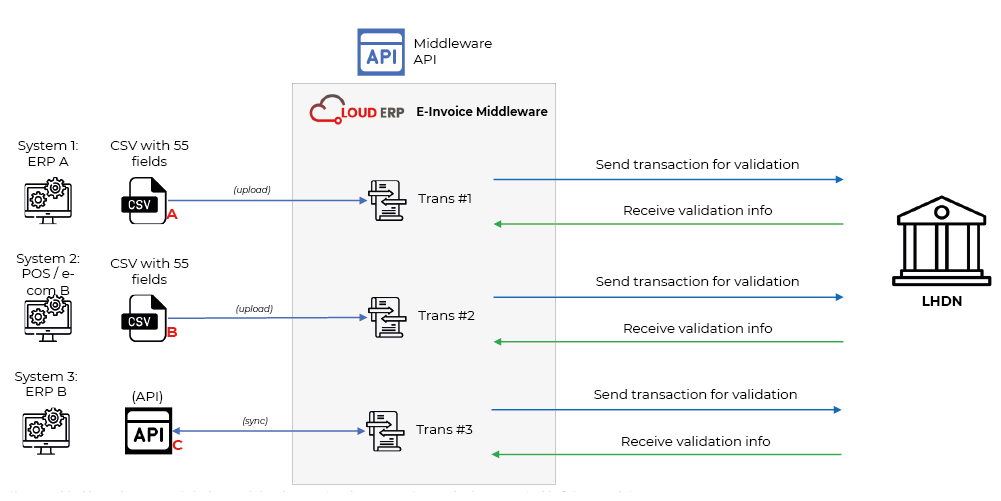
*Illustration provided based on current design and development, enhancements may be incorporated in future updates.
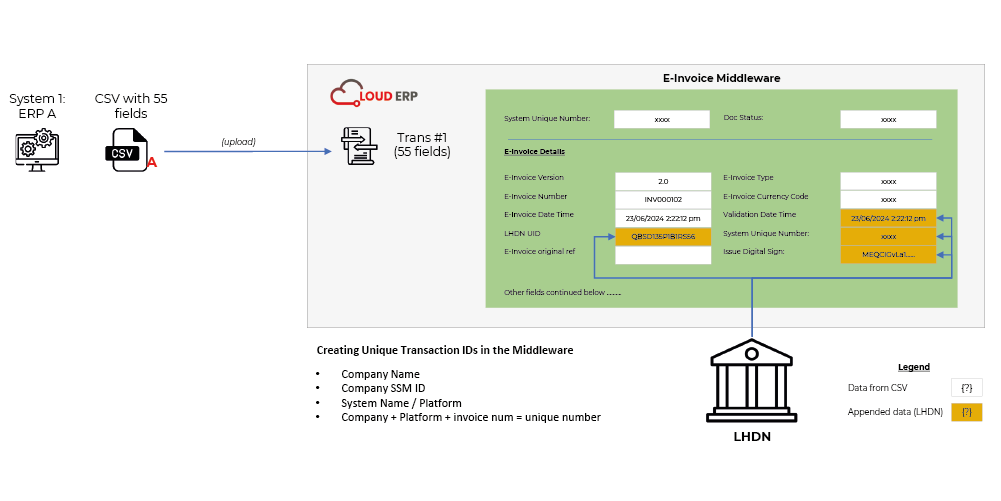
*Illustration provided based on current design and development, enhancements may be incorporated in future updates.
A. Technically, the LHDNM initiative for e-invoicing focuses on the validation of invoice data and the generation of a certificate / QR code. This process allows for end Customers to cross-check invoice details, and also improves tax reporting and collection.
B. LHDNM’s initiative for e-invoicing does not immediately focus on the exchange of electronic invoices (e-invoice) in an integrated and structured data format (for example through an EDI, PEPPOL, and such) at this stage.
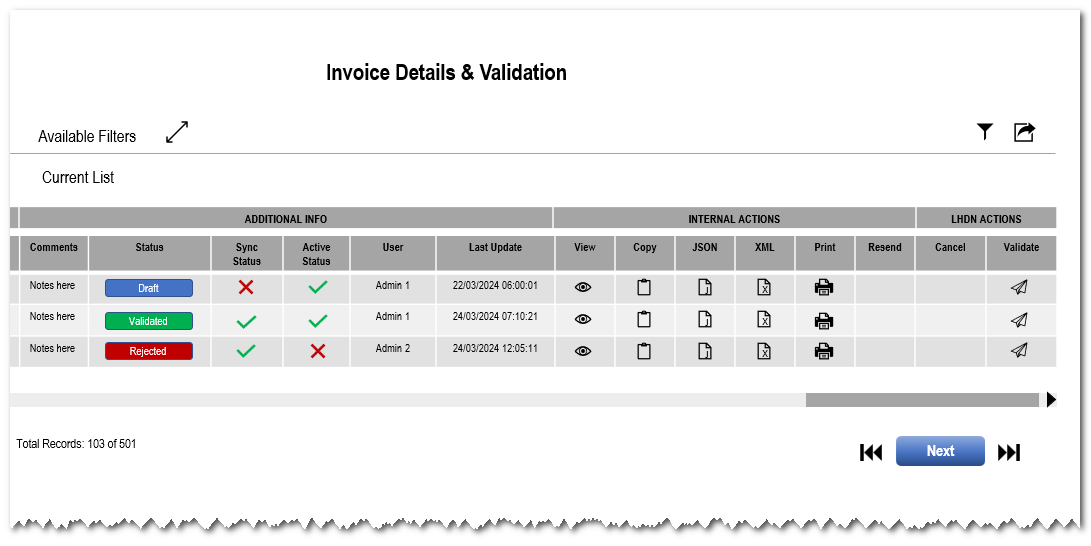
*Illustration provided based on current design and development, enhancements may be incorporated in future updates.
To facilitate the retrieval and verification of TIN for taxpayers, there are two (2) primary avenues available:
1. Utilise the MyTax Portal which allows businesses to conveniently check their TIN;
2. If a TIN cannot be retrieved through this channel, taxpayers can use the e-Daftar platform to initiate registration and obtain their respective TIN via the steps below:
Client X has a scenario where a max of 70k line items are processed in 1 invoice.
Through the LHDN SDK page (link here):
Currently, the middleware tool (API / CSV) will ‘batch’ 100 e-invoices per sync to LHDN, or up to 5 MB (either, or). As the middleware is updating the XML/JSON files to LHDN, it will respect the 300 KB max size for each e-invoice update. LHDN does not restrict the number of lines in the e-invoice, as long as the above criteria are met.*
As Client X has up to 70k lines, we would also have to simulate this in the back end to ensure that the restrictions set by
LHDN can be met.
201801015456 (1277472-X)